Tag: 1969

  • From Dust to Gleam: The 1969 Charger R/T Barn Find — and What the Dust Was Hiding

    From Dust to Gleam: The 1969 Charger R/T Barn Find — and What the Dust Was Hiding

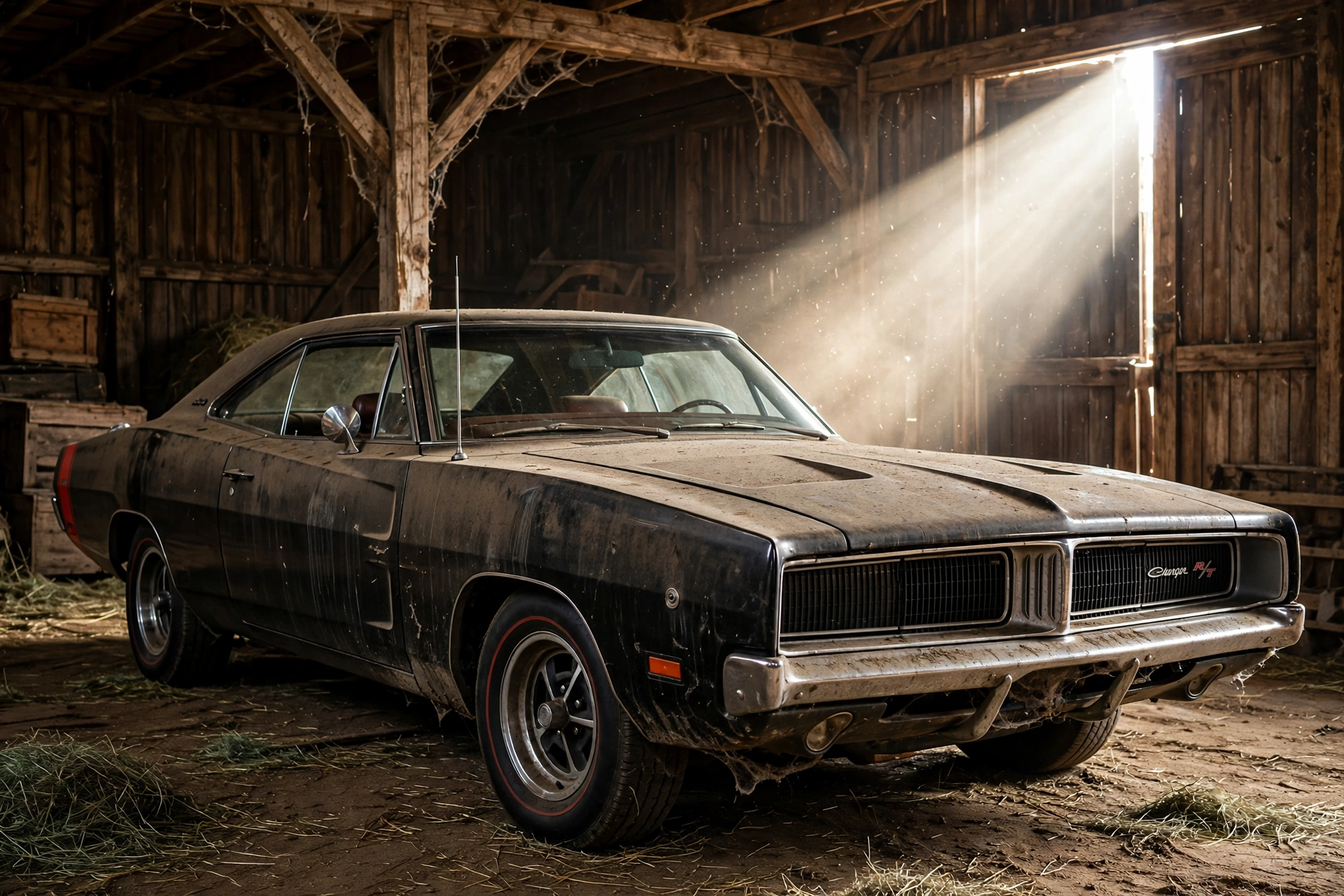
    Every barn find starts the same way: a door that has not opened in years, a shape under a tarp or a layer of dust, and the same question — is this a treasure, or just an old car that somebody gave up on? Tonight’s reel shows both ends of that story in ten seconds: a 1969 Dodge Charger R/T, filthy and forgotten, and then the same car gleaming, restored, alive again. The transformation is the hook. The car underneath is the reason it matters.

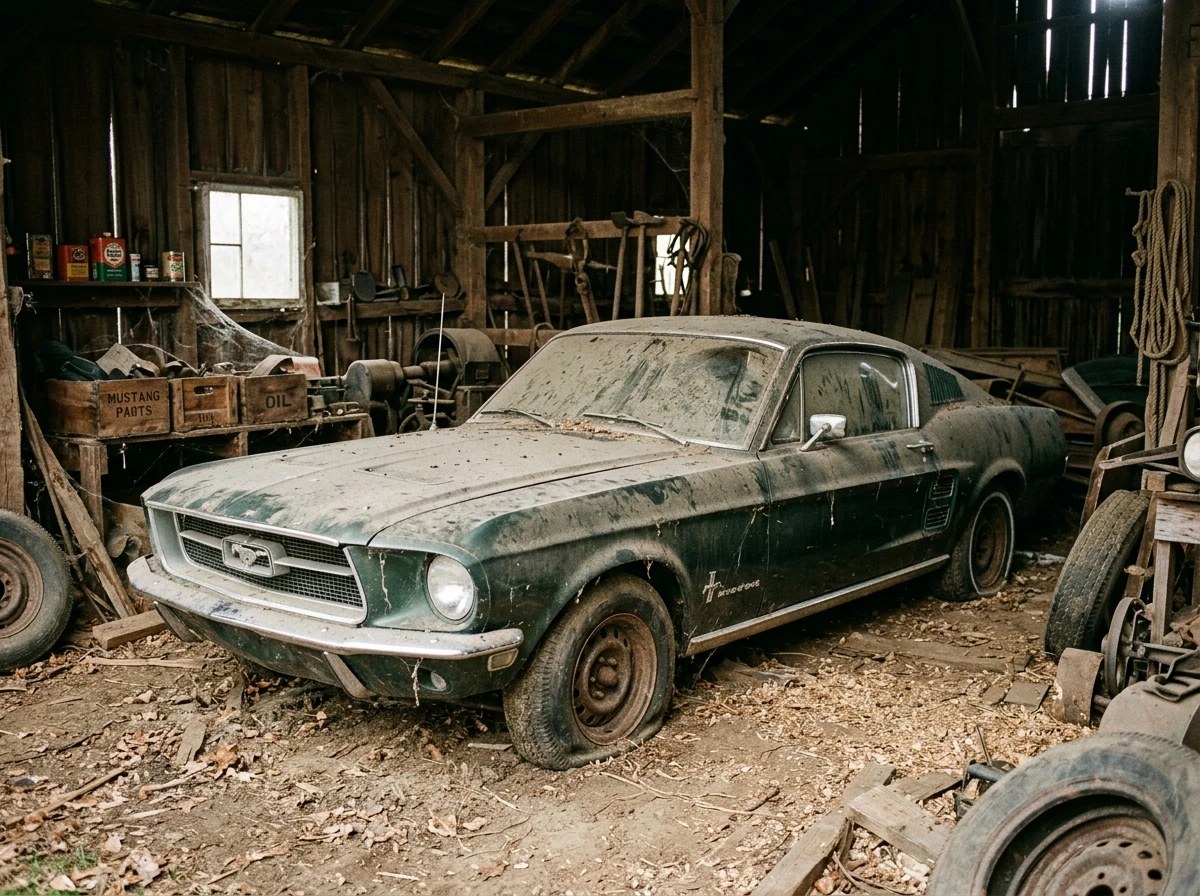
    It is not the first barn find we have covered — a Mustang Mach 1 waited forty years in the dark before anyone opened its barn door. But the Charger is a different kind of discovery, because what makes it valuable was decided on the factory floor in 1969, not in the barn.

    What the R/T actually is

    The 1969 Charger R/T is the performance version of the second-generation Charger — the restyled car that turned a slow seller into a hit, with production jumping to 96,100 cars in 1968 after just 15,788 the year before. R/T stands for Road/Track, and unlike plenty of performance badges of the era it came with real hardware: a heavy-duty suspension with stiffer torsion bars and a rear stabiliser, bigger brakes, heavy-duty shocks, dual exhausts with chrome tips, and the bumblebee stripe around the tail.

    440 standard, Hemi rare

    Under the hood, every R/T left the factory with the 440 Magnum as standard: 440 cubic inches, a single four-barrel carburettor, 375 horsepower and 480 lb-ft of torque. The only optional engine was the 426 Street Hemi — 425 horsepower and 490 lb-ft from two four-barrel carburettors — and almost nobody ordered it. Dodge built just over 20,000 Charger R/Ts for 1969, but only 432 of them got the Hemi: 208 with the TorqueFlite automatic, 224 with the four-speed manual. That is why a dusty Hemi car is a six-figure discovery and a dusty 440 car is still a serious one. In period testing, Motor Trend recorded a 440 automatic R/T doing 0–60 mph in 6.1 seconds and the quarter-mile in 13.9 seconds at 101.4 mph. The Hemi’s rarity is the same story we told in our Battle of the Big Three cold-start comparison, where the 426 Hemi was the Mopar entry.

    Four questions before a single bolt turns

    But the dust hides the questions that decide whether a barn find is worth restoring at all. First: is it numbers-matching — does the engine in the car match the car it left the factory in? Second: is the fender tag still there, and does it say R/T, or is this a base Charger wearing an R/T stripe? Third: where is the rust — floors, frame rails and the lower quarters, the places dust and damp work together for decades. And fourth, the least glamorous and most decisive: is there a clean title? A genuine R/T with its original 440, a readable tag and solid rails is a restoration. The same car with a swapped engine, a missing tag and rotten floors is a parts donor wearing a good story.

    That is the real before and after. The dust makes every barn find look the same — mysterious, romantic, full of promise. The gleam at the end of tonight’s reel is not just polish. It is the answer to all four questions coming back yes, one expensive bolt at a time.

    Tonight’s reel shows the dust and the gleam — watch it, then tell us in the comments: you open the barn doors and find THIS. What is the first thing you do?

    Sources

    Specifications, production figures and test results in this article were checked against:

  • Three Cold Starts, One Question: Which V8 Sounds Best — Ford, Chevy or Mopar?

    Three Cold Starts, One Question: Which V8 Sounds Best — Ford, Chevy or Mopar?

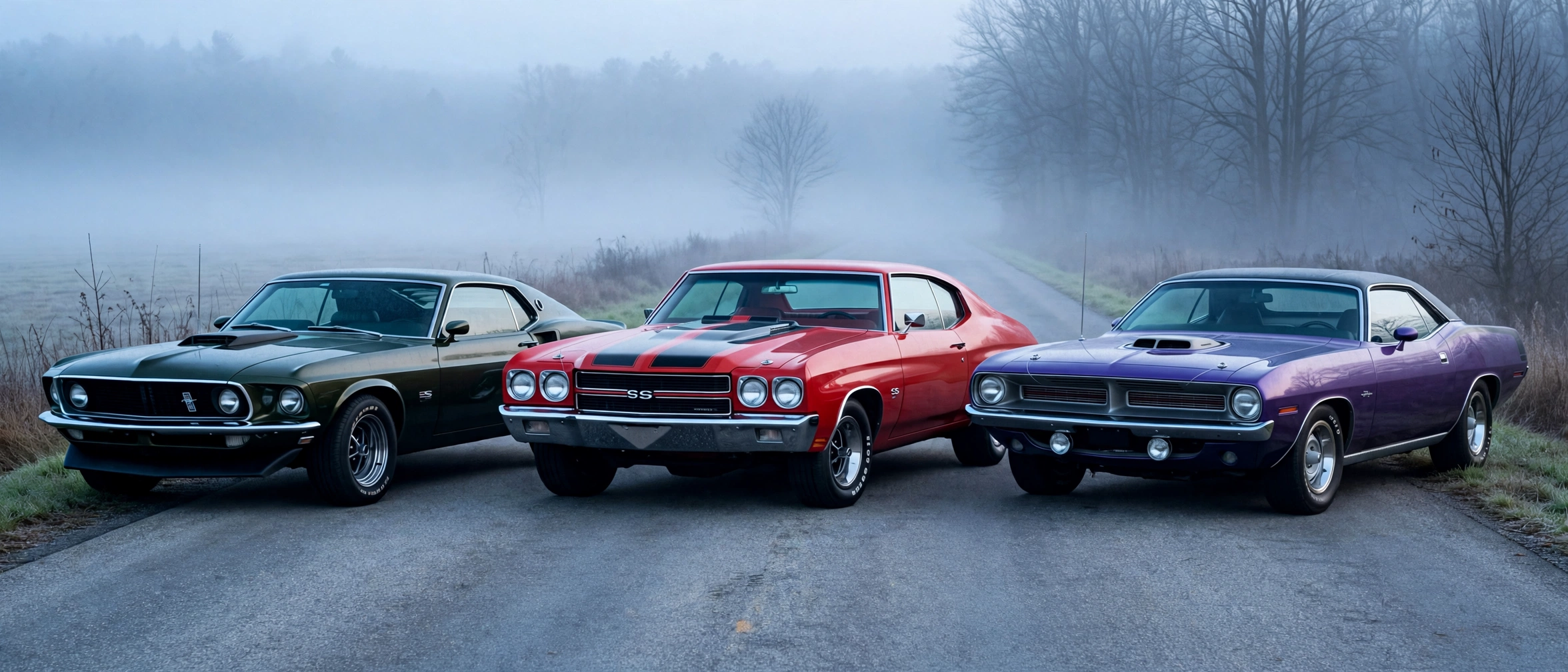
    A cold start is the most honest sound a muscle car ever makes. No warm-up, no choke fully off, no exhaust yet hot enough to hide anything — just a big V8 clearing its throat on a cold morning, fast idle, thick vapour, and the whole neighbourhood knowing exactly what you drive. Tonight’s reel lines up three of them, one from each of the Big Three, and asks you to vote 1, 2 or 3. Here is the case for each side.

    1 — Ford: the Boss 429. Ford’s entry is the most exotic engine of the three. The 429 cubic-inch Boss V8 was a race design built to satisfy NASCAR’s homologation rules: aluminium heads with semi-hemispherical combustion chambers — the “semi-hemi” — four-bolt main caps, a forged steel crank and forged rods, and a 735 CFM Holley four-barrel. Ford rated it at 375 horsepower, but everyone at the time understood the real figure was near 500. Only 859 were built for 1969, each one hand-finished by Kar Kraft because the engine was too big for a standard Mustang engine bay. On a cold start it is the highest-strung of the three — a sharp, metallic bark that settles into an impatient, cammy idle. It sounds like a race engine because that is what it is: the street car existed only so the engine could race.

    2 — Chevy: the LS6 454. Chevrolet’s answer is displacement and torque. The 1970 Chevelle SS 454 in LS6 form made 450 horsepower and 500 lb-ft of torque — the most powerful stock big-block Chevrolet ever built, and a one-year-only option. Where the Boss 429 screams, the LS6 thunders: it is widely remembered for one of the deepest exhaust notes ever fitted to a production muscle car, a slow, thunder-like rumble at idle that explodes into a booming roar under throttle. On a cold morning it is the one you feel in your chest before you hear it properly. It does not need to rev to make its point — it just needs to idle.

    3 — Mopar: the 426 Hemi. Chrysler’s 426 Hemi is the legend the other two were built to beat. 425 horsepower and 490 lb-ft from hemispherical combustion chambers — the design that gave the engine its name — and an exhaust pulse so deep and slow that at idle the whole car shakes visibly. The Hemi’s sound is primal rather than refined: a thunderous, loping idle that turns into a raw bellow the moment the throttle opens. It is the engine Ford built the Boss 429 to take on at the superspeedways, and the one every bench race in 1970 eventually came back to.

    So which one wins tonight? There is no wrong answer — that is the point of the vote. The Ford is the rarest and the most race-bred, the Chevy is the deepest and the most powerful on paper, and the Mopar is the one that made the other two necessary. Listen to all three cold starts in tonight’s reel, turn the volume up, and vote with your ears, not your badge loyalty. Or vote with your badge loyalty — nobody will blame you.

    Watch tonight’s three cold starts on the page, then vote in the comments: 1 for Ford, 2 for Chevy, 3 for Mopar. Which V8 wakes the street best?

    Sources

    Specifications, production figures and test results in this article were checked against:

  • The 1969 AMC AMX 390: The Two-Seat Underdog That Punched Above Its Weight

    The 1969 AMC AMX 390: The Two-Seat Underdog That Punched Above Its Weight

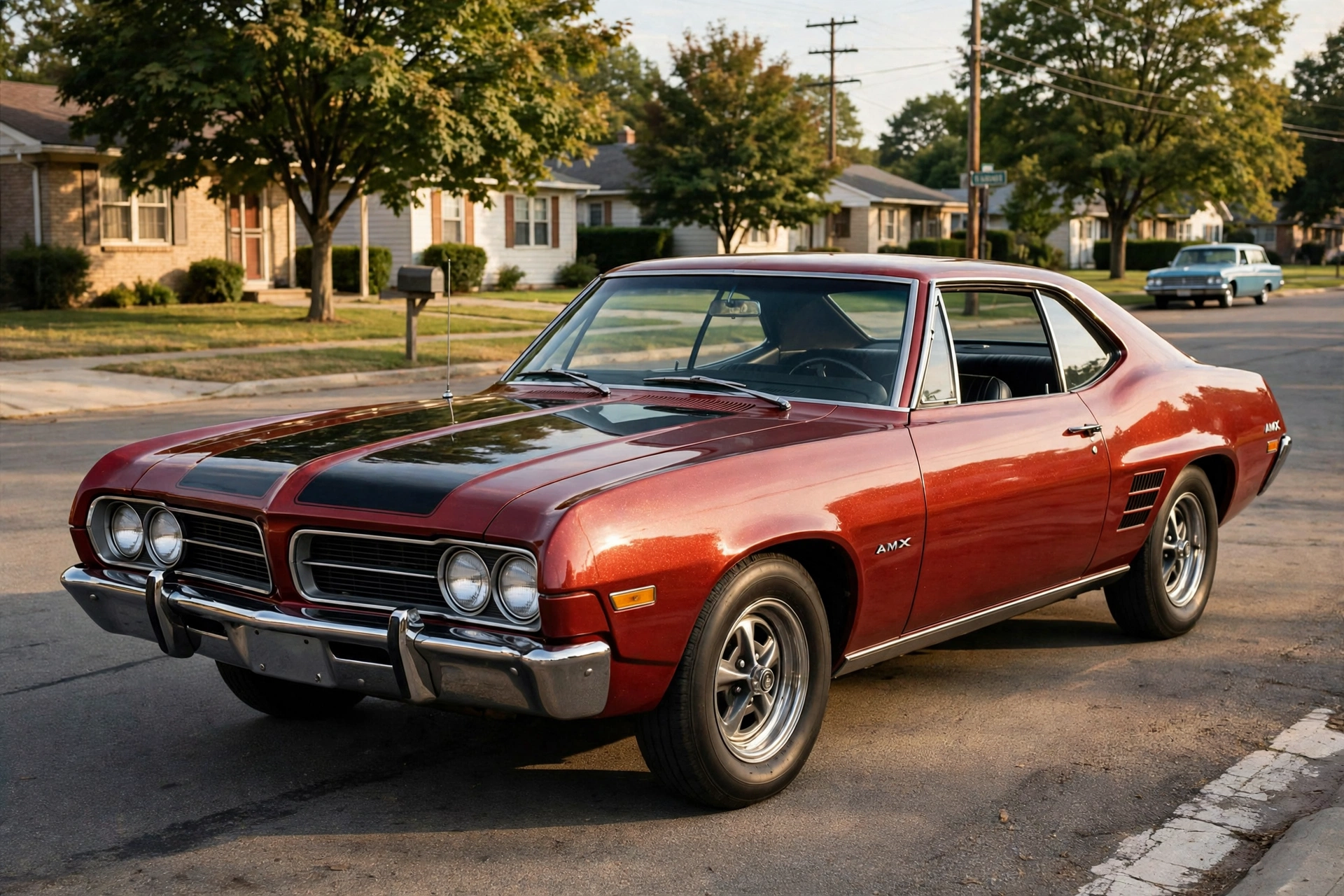
    In 1968, American Motors did something none of the Big Three would dare: it built a two-seat sports car. Not a shortened pony car, not a trim package — a genuine two-seater, on a 97-inch wheelbase, aimed squarely at the Chevrolet Corvette. From 1968 to 1970, exactly two American production cars seated two people: the Corvette and the AMX. AMC built just 19,134 of them in three model years — 6,725 in 1968, 8,293 in 1969, and 4,116 in 1970 — which makes every surviving AMX rarer than almost any Mustang or Camaro of the same era.

    The 390: AMC’s Biggest Hammer

    The 1969 car in this morning’s reel is the one to have: the AMX 390. The 390-cubic-inch (6.4-litre) V8 was the top engine in the range, rated at 315 horsepower at 4,600 rpm and 425 lb-ft of torque at 3,200 rpm, with a 10.2:1 compression ratio and a single Carter four-barrel carburetor. It was a serious piece for the money — a forged steel crankshaft and forged connecting rods at a time when plenty of competitors were casting theirs. In 1969, 3,620 buyers paired the 390 with a four-speed manual and 2,183 with the three-speed automatic. Add the Go Package — $311 covering the 390, power disc brakes, redline tyres, a handling package, a Twin-Grip differential and heavy-duty cooling — and you had a complete performance car for about $3,681, on a base price of $3,297.

    It was quick, too, and not just on paper. Motor Trend’s road test of a 390 four-speed AMX recorded 0–60 mph in 6.9 seconds and the quarter-mile in 15.2 seconds at 92 mph — in a car weighing barely over 3,000 pounds. That is the AMX’s real trick: it did not need the biggest engine in Detroit, because it did not carry the most weight. The short wheelbase and light body made it feel closer to a sports car than a muscle car, which is exactly what AMC’s designer Dick Teague intended.

    Why It Stayed the Underdog

    So why is it still the underdog? AMC never had Ford’s or GM’s megaphone, and the AMX never got a second act — the two-seater died after 1970, and the Javelin carried on alone. But that is also the appeal. The 1969 AMX 390 is a car that had to be good to exist at all: no heritage to trade on, no massive dealer network, just a small company betting everything on 97 inches of wheelbase and 390 cubic inches. This morning’s reel shows the engine bay because the engine bay is the argument — open it, and the smallest car company in Detroit suddenly looks like it belonged in the fight.

    This morning’s reel asked it first — Comment 1 for AMX, 2 for JAVELIN. Watch the 390 under the hood, then tell us: does the underdog deserve a place next to the Corvette?

    Keep Reading

    Sources

    Specifications, production figures and test results in this article were checked against:

  • Listen to That 429 Scream: The 1969 Boss 429 Mustang Was a NASCAR Engine With Licence Plates

    Listen to That 429 Scream: The 1969 Boss 429 Mustang Was a NASCAR Engine With Licence Plates

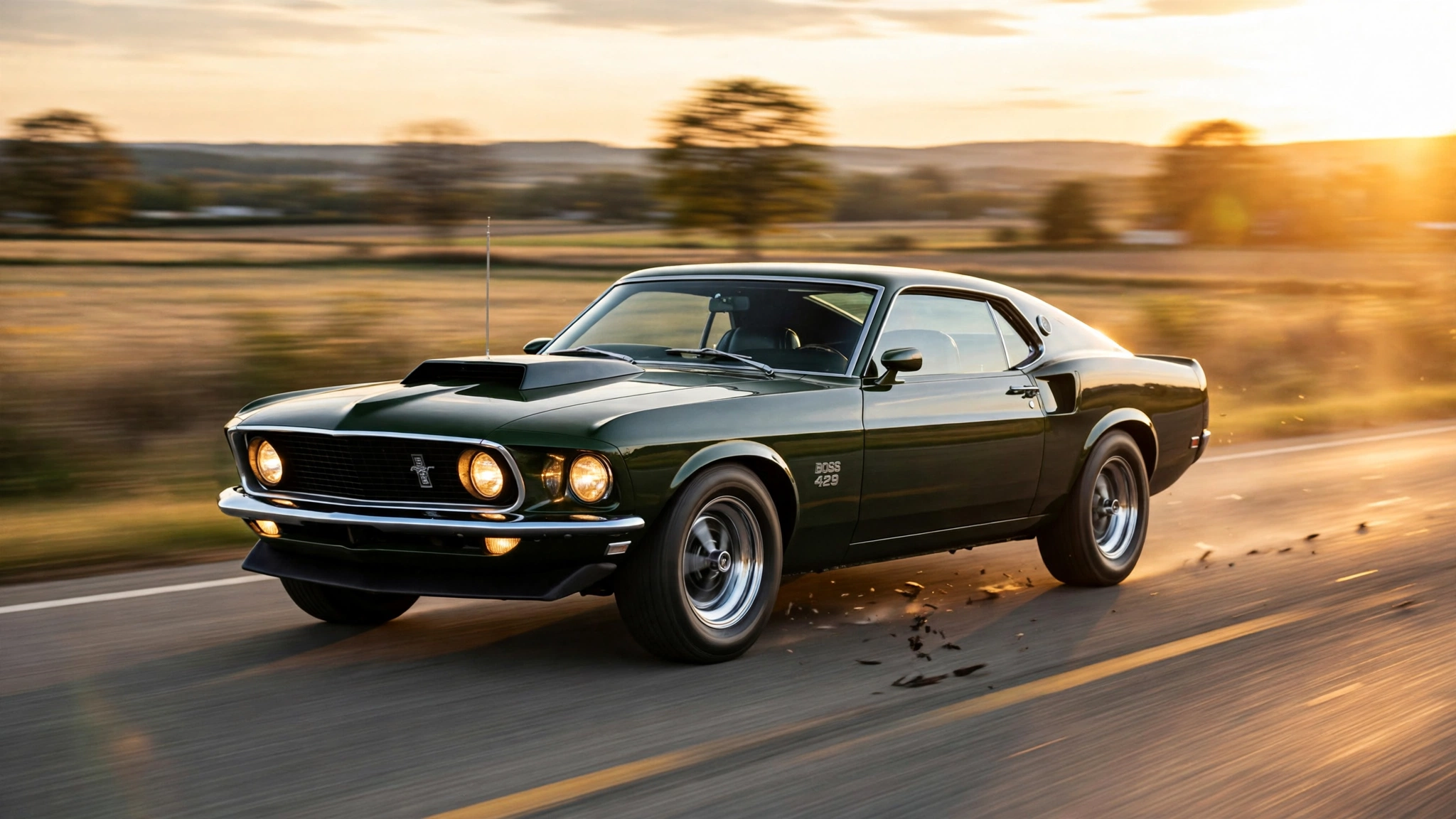
    Some muscle cars were built to sell. The 1969 Boss 429 Mustang was built to qualify. NASCAR’s homologation rules said Ford had to put at least 500 street cars with its new 429 engine on the road before it could race the engine — so Ford did exactly that, and not one car more than it had to. Only 859 Boss 429 Mustangs were built for 1969, with another 499 for 1970.

    The engine was the whole point. The 429 cubic-inch (7.0-litre) Boss V8 was a race design from the start: aluminium cylinder heads with semi-hemispherical combustion chambers — the “semi-hemi” — four-bolt main caps, a forged steel crank and forged steel connecting rods, and a 735 CFM Holley four-barrel on an aluminium intake. Ford rated it at 375 horsepower at 5,200 rpm and 450 lb-ft of torque at 3,400 rpm, figures everyone at the time understood were conservative. Period tests and insider estimates put the real output near 500 horsepower, with quarter-mile times around 14 seconds.

    It was so big it did not fit. A standard Mustang engine bay could not take the Boss 429, so Ford sent partially built bodies from its Rouge plant to Kar Kraft, its specialist contractor in Brighton, Michigan — the same outfit that had helped build the Le Mans-winning GT40. Kar Kraft widened the space between the shock towers, revised the suspension geometry, relocated the battery to the trunk, and installed the engine by hand. Every finished car carried a Ford serial number plus a Kar Kraft “KK” number stamped on its door data plate. The 1969 cars ran hydraulic lifters; 1970 switched to solid lifters to stop valve float at high rpm.

    Ford’s target was never the Mustang itself. The homologated 429 went racing in Torino Talladegas and Mercury Cyclones on the superspeedways, making its NASCAR debut on 30 March 1969 at Atlanta with Cale Yarborough at the wheel — built to take on Chrysler’s 426 Hemi, the engine that had ruled the big ovals. The Mustang was simply the street car Ford chose to carry the engine into the showrooms, because no Torino could make the statement a Mustang could.

    That is what makes tonight’s reel worth ten seconds of your evening. The car in it is one of 859 — a hand-finished homologation special, a race engine wearing licence plates, sold through ordinary dealerships because a rulebook demanded it. Turn the volume up for the flyby, then answer the reel’s question honestly: would you drive it, or lock it in a museum?

    Watch tonight’s 1969 Boss 429 flyby reel on the page, then tell us in the comments: drive it, or lock it in a museum?

    Ford reference material

    Ford’s Mustang timeline lists the Boss 429 as a 375-horsepower addition to the 1969 lineup. Ford Performance’s engine history provides background on the 429 Boss and the related Ford big-block engines.

    Sources

    Specifications, production figures and test results in this article were checked against:

  • Here Comes the Judge: The 1969 Pontiac GTO Judge

    Here Comes the Judge: The 1969 Pontiac GTO Judge

    Pontiac did not set out to build The Judge. The original plan was a cheap, stripped-down GTO — a budget drag-strip special with a 350 V8, aimed at the Plymouth Road Runner. Somewhere on the way to the showroom, the joke took over. Pontiac named it after the catchphrase from Rowan & Martin’s Laugh-In — “Here comes the Judge” — and built the loudest, proudest GTO it had ever made.

    The $337 Package

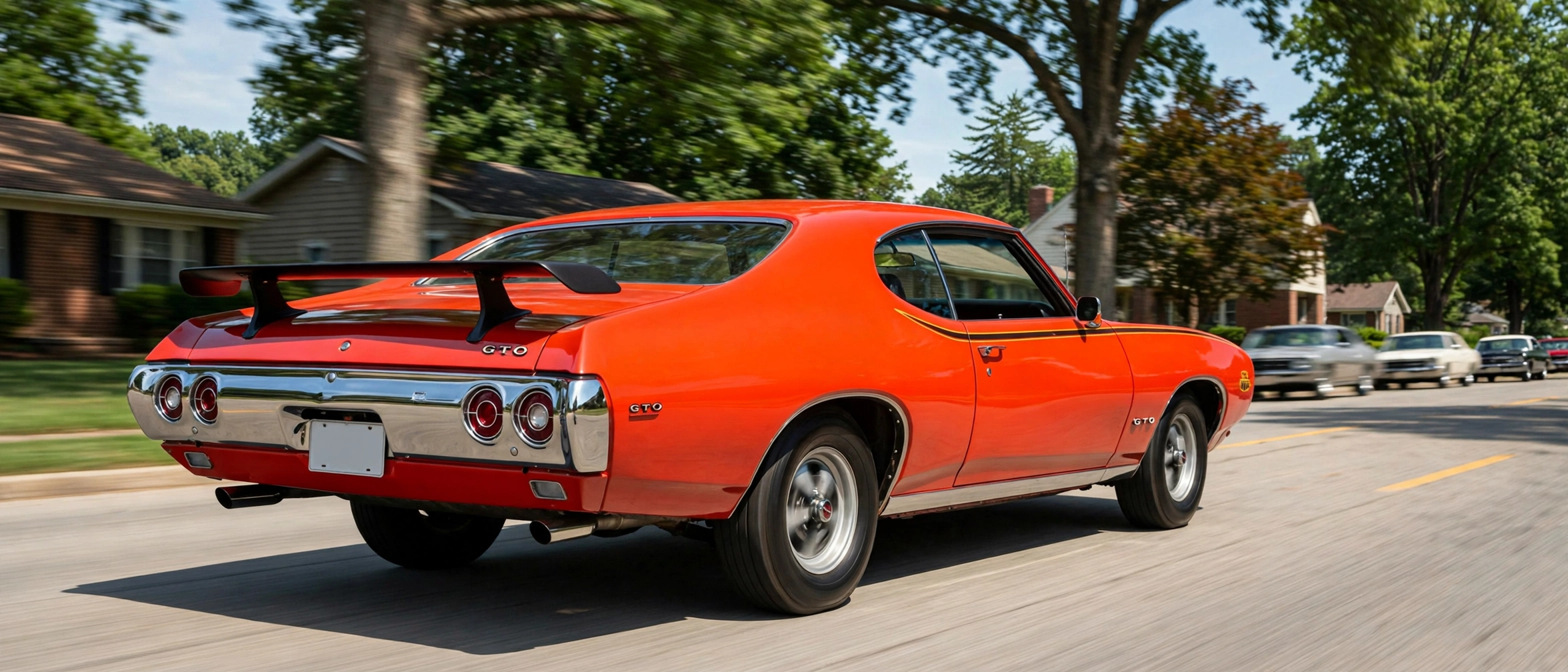
    The Judge package cost $337 on top of a 1969 GTO, and it spent the money where everyone could see it. The first cars were all painted Carousel Red — a bright orange-red borrowed from the Firebird — with tri-color side stripes, a body-color Endura front bumper, Rally II wheels without trim rings, and a 60-inch rear wing bolted to the decklid. It was impossible to miss, and that was the point.

    Ram Air III and Ram Air IV

    Underneath the show, the hardware was serious. The standard engine was the Ram Air III: a 400-cubic-inch V8 with a hot hydraulic cam, 10.75:1 compression and a Rochester Quadrajet, rated at 366 horsepower and 445 lb-ft of torque. The only engine option was the Ram Air IV at 370 horsepower. Functional hood scoops rammed cool air into the carburetor, and with the right gears the Judge was a consistent 14-second drag-strip performer — quick enough to back up every bit of the attitude.

    6,833 Built — 108 Convertibles

    Pontiac built 6,833 Judges for 1969: 6,725 hardtops and just 108 convertibles. The first roughly 2,000 cars were all Carousel Red before other GTO colors were allowed, which is why the orange-red Judge is the one everyone pictures. The Judge ran for only three model years — 1969 to 1971, 11,004 cars in total — and then it was gone, a victim of the same insurance rates and emissions rules that killed the whole muscle era.

    What survives is the idea: a car that refused to be subtle. The Judge did not whisper about performance. It wore stripes, a wing and a punchline, and then went out and ran the number. More than fifty years later, a Carousel Red Judge cruising down a sunny street still does what it did in 1969 — it makes everyone look.

    So here is the question the page will ask again on Day 7, when the Judge returns for the photo post: underrated or overrated? Be honest.

    Watch this morning’s Judge reel on the page, then tell us in the comments: underrated or overrated?

    Keep Reading

    Sources

    Specifications, production figures and test results in this article were checked against:

  • Forty Years in the Dark: The Mach 1 That Waited

    Forty Years in the Dark: The Mach 1 That Waited

    Every barn-find story starts the same way: a door that hasn’t opened in decades, a shaft of light, and a shape under the dust that makes your heart beat faster. In this case the shape is a Mustang Mach 1 fastback — parked in the mid-1980s when life got busy, and simply never driven again.

    The Mach 1 deserves the drama. Ford launched it for 1969 as the Mustang’s serious performance flagship: fastback-only, with engines running from the 351 Windsor up to the 428 Cobra Jet. It was the car that killed off the GT and took over as the Mustang’s performance flagship once the Shelby program ended. Finding one asleep for forty years is finding a piece of the horsepower war in suspended animation.

    What forty years actually does to a car

    Dust is the least of it. Time attacks a sleeping car in a predictable order, and knowing the order is what separates a rescue from a very expensive sculpture:

    • Fuel system first. Old gasoline turns to varnish, tanks rust from the inside, and rubber lines crack. Nothing from the original fuel system should be trusted.
    • Rubber everything. Tires, belts, hoses, seals and bushings harden and split — even when they look fine in the dark.
    • Brakes. Master cylinders corrode, wheel cylinders seize, and fluid absorbs moisture for four decades straight.
    • The engine itself. Rings can stick, valves can hang open, and cylinders collect moisture. This is the part everyone wants to rush — and the part that punishes rushing.
    • Uninvited tenants. Mice treat wiring harnesses and seat foam as a housing development. Check before you power anything.

    The wake-up order (don’t skip steps)

    1. Photograph everything before touching a bolt. Originality is value, and memory lies.
    2. Pull the plugs, oil the cylinders, and let it sit overnight. Then turn the engine by hand — by hand — before the starter ever gets a vote.
    3. Fresh fluids everywhere: oil, filter, coolant. Prime the oil pump until the gauge or light says pressure.
    4. Feed it from a clean can, not the tank, with a new filter inline. The tank gets cleaned or replaced later.
    5. Brakes before roads. A car that starts but can’t stop is a story nobody wants to tell.
    6. First drive: short, slow, close to home. Listen. A forty-year nap ends in stages, not in a burnout.

    The rule of the barn: the first start is a diagnostic, not a celebration. If it turns by hand, holds oil pressure and takes clean fuel, the celebration comes soon enough — and it will sound like 1969.

    Is a car like this worth saving? A Mach 1 with its original drivetrain is worth saving almost regardless of condition — the fastback shape and the performance pedigree aren’t coming back. But the honest answer is that the cheapest barn find is the one somebody else already woke up. Budget for the fuel system, brakes, rubber and tires before you budget for paint, and the car will reward you in the right order.

    Sources

    Specifications, production figures and test results in this article were checked against: