Category: Blog

  • 455 vs 455: The 1970 Buick GSX Stage 1 and the Oldsmobile 442 W-30 Were GM’s Quiet War

    455 vs 455: The 1970 Buick GSX Stage 1 and the Oldsmobile 442 W-30 Were GM’s Quiet War

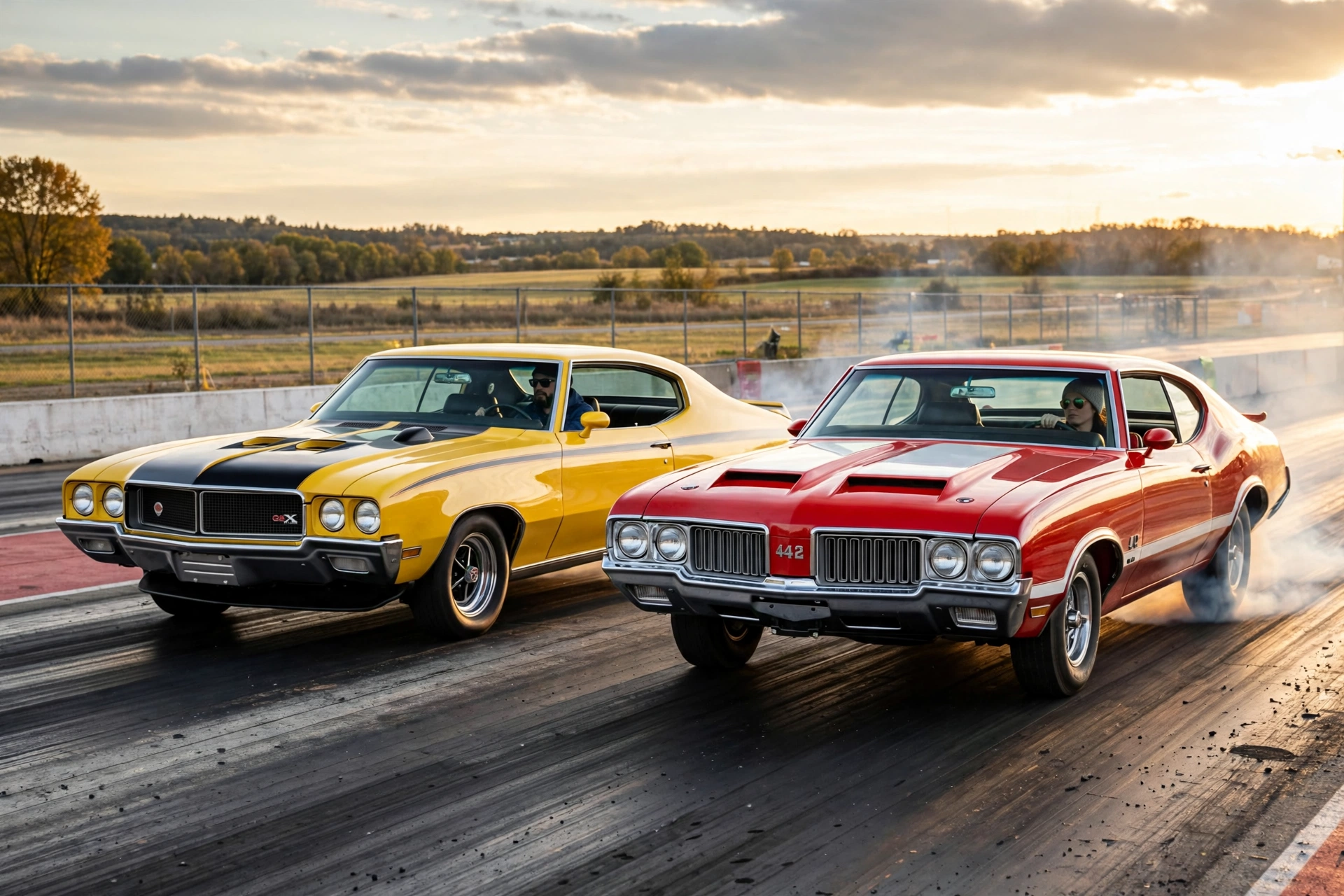
    This morning’s reel asked the question with tyre smoke instead of words: a 1970 Buick GSX Stage 1 and a 1970 Oldsmobile 442 W-30, staged side by side at the lights, both with a 455-cubic-inch V8 under the hood. Same displacement, same GM A-body platform, same model year — and two completely different attitudes about what a muscle car should be. The Buick was the torque monster nobody saw coming. The Oldsmobile was the gentleman’s brawler. Both were underrated on paper, and both were faster than their badges admitted.

    The Buick: the torque champion

    The GSX debuted in 1970 as an appearance package on the Buick GS 455, and it did not whisper. Saturn Yellow or Apollo White only, black hood stripes, a rear spoiler, and a blacked-out grille — it looked like a gentleman’s express and ran like a brawler. Buick built just 678 GSX coupes in 1970. The Stage 1 option on top of that added larger valves, 10.5:1 compression, a hotter cam and a specially tuned Quadrajet carburettor, for $199.05 on a $3,283 GS 455 coupe. Officially it made 360 horsepower — just 10 more than the standard 455. But the number that mattered was the torque: 510 lb-ft at only 2,800 rpm, the highest torque figure of any American production car at the time, a record that stood until the Dodge Viper’s V10 arrived. On the dyno, Stage 1 engines went around 400 horsepower. On the street, the GSX Stage 1 ran 0–60 mph in about 5.5 seconds — quicker than cars with far louder reputations.

    The Oldsmobile: the gentleman’s brawler

    The 442 W-30 took the opposite route to the same destination. The W-30 package added a fibreglass ram-air hood, an aluminium intake, a hotter cam, revised heads and red plastic inner fenders to save weight. The 455 made 370 horsepower and 500 lb-ft of torque on paper, and like the Buick, it made more than that on a dyno, comfortably into 400-horsepower territory. Oldsmobile built just over 2,500 W-30 hardtops for 1970. It was the refined member of the GM muscle family — upscale interior, premium comforts, a car that handled better than most of its rivals — and it still ran 0–60 in about 6 seconds and the quarter-mile in the high 13s. The W-30 is the connoisseur’s pick: people who have owned several of these cars tend to keep the Olds.

    Same displacement, different attitude

    So which one wins the duel? On the spec sheet, the Buick has the torque and the rarity — 678 GSX coupes against a few thousand W-30s — and the quicker launch. The Oldsmobile has the horsepower, the handling and the polish. On the strip, it came down to the driver and the tyres, which is exactly why the duel format works: there is no wrong answer, only a favourite. That is the same reason our Chevelle vs Road Runner duel from Day 6 ended in a dead heat — when two cars are this evenly matched, the vote is about character, not numbers.

    Both cars also belong on any honest list of the decade’s best — our Top 10 Muscle Cars of the 1970s has the GSX Stage 1 at number three and the 442 W-30 at number six, and neither ranking would surprise anyone who has driven one. The Buick embarrassed cars with louder reputations. The Oldsmobile outclassed them. GM built both in the same year, on the same platform, with the same 455 cubic inches — and let its own divisions fight it out in the showroom.

    This morning’s reel asked it first — Comment 1 for the GSX, 2 for the 442. Watch the burnout, listen to both big-blocks, then tell us: same displacement, different attitude. Which one are you taking home?

    Sources

    Specifications, production figures and test results in this article were checked against:

  • First Wash in 20 Years: The 1970 Pontiac Trans Am That Time Forgot

    First Wash in 20 Years: The 1970 Pontiac Trans Am That Time Forgot

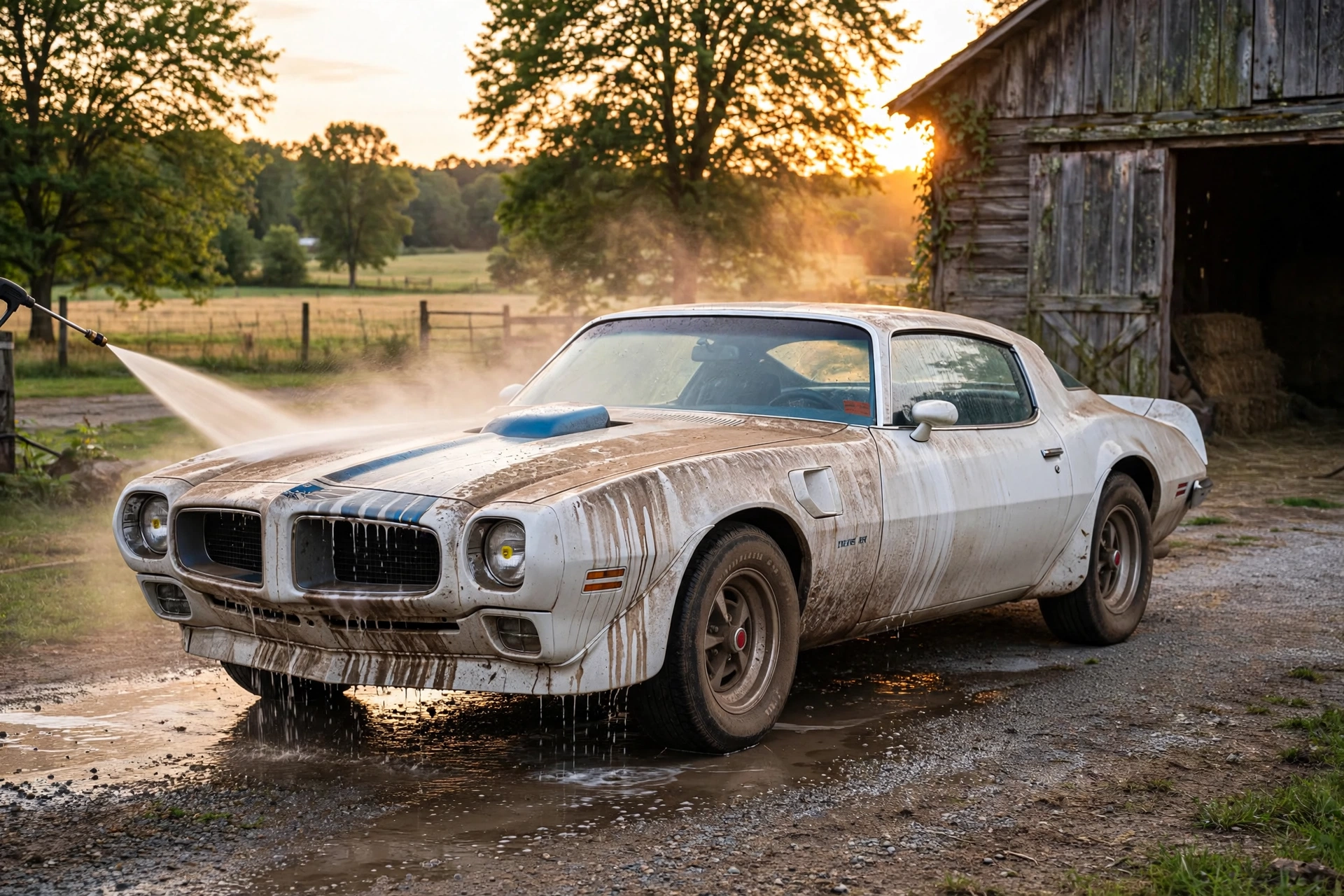
    There is nothing more satisfying than watching decades of dust wash off a true classic — and tonight’s reel is ten seconds of exactly that. A pressure washer peels twenty years of grime off a 1970 Pontiac Trans Am, and with every pass, the car underneath gets sharper: Polar White paint, blue stripes, the shaker hood scoop shaking with the engine. But the wash is only the beginning of the story, because what makes this car special was decided on the factory floor in 1970, not in the barn.

    One of 3,196 — and a first-year car

    The 1970 Trans Am is the first year of the second-generation Firebird, introduced mid-year — a 1970½, in collector shorthand. Pontiac built just 48,739 Firebirds for 1970, and only 3,196 of them were Trans Ams. That makes it one of the rarest Trans Ams of any year, and the short production run was no accident: the new Camaro and Firebird arrived so late that the model year was cut short. Of those 3,196 cars, 2,150 were sprayed Polar White with blue stripes and 1,046 were Lucerne Blue with white stripes. There were only two colours. Pick one, and you had already joined a very small club.

    Ram Air III standard, Ram Air IV almost mythical

    Every 1970 Trans Am left the factory with a 400-cubic-inch V8, and the standard engine was the Ram Air III: 345 horsepower and 430 lb-ft of torque, breathing through the rear-facing shaker scoop that moved with the engine. The optional engine was the Ram Air IV — 370 horsepower, bigger ports, better heads, swirl-polished valves and an aluminium intake — and almost nobody ordered it. Pontiac built 3,108 Trans Ams with the Ram Air III and just 88 with the Ram Air IV. Less than three percent of production got the engine the car was named for. In period testing, a Ram Air III four-speed ran 0–60 mph in 5.7 seconds and the quarter-mile in 14.1 seconds. One small detail collectors love: 1970 was the only year the shaker scoop carried no engine designation at all.

    It is the same lesson as our 1969 Charger R/T barn find — the dust makes every forgotten car look equally romantic, but the factory paperwork decides what it is really worth. A numbers-matching Ram Air IV car is a six-figure discovery. A Ram Air III car with its original engine, a readable build sheet and solid floors is still a serious one.

    Wash it — or keep the patina?

    That is the question tonight’s reel is really asking, and it is the same argument every barn find starts. Wash it and you get the gleam: the white paint, the blue stripes, the car Pontiac actually built. Keep the dust and you keep the story — twenty years of sitting still, untouched, exactly as found. Our advice is the same as it was for the Mustang Mach 1 that waited forty years in the dark: wash it, but do not restore anything until you know what you have. Check the numbers first — is the engine the one the car left the factory with? Check the rust — floors, frame rails and lower quarters, where dust and damp work together for decades. And check the paperwork, because a genuine 1970 Trans Am with a clean title and its original 400 is a restoration. The same car with a swapped engine and rotten floors is a parts donor wearing a good story.

    The pressure washer does not answer any of those questions. It just strips away the twenty years so you can finally see the car you are asking them about. And for a first-year Trans Am — one of 3,196, with a shaker scoop and a rear spoiler and a shape Pontiac would ride for another decade — what it reveals is worth the wait.

    Tonight’s reel shows the first wash in twenty years — watch it, then tell us in the comments: would you restore it to showroom shine, or keep the patina and drive it exactly as found?

    Sources

    Specifications, production figures and test results in this article were checked against:

  • From Dust to Gleam: The 1969 Charger R/T Barn Find — and What the Dust Was Hiding

    From Dust to Gleam: The 1969 Charger R/T Barn Find — and What the Dust Was Hiding

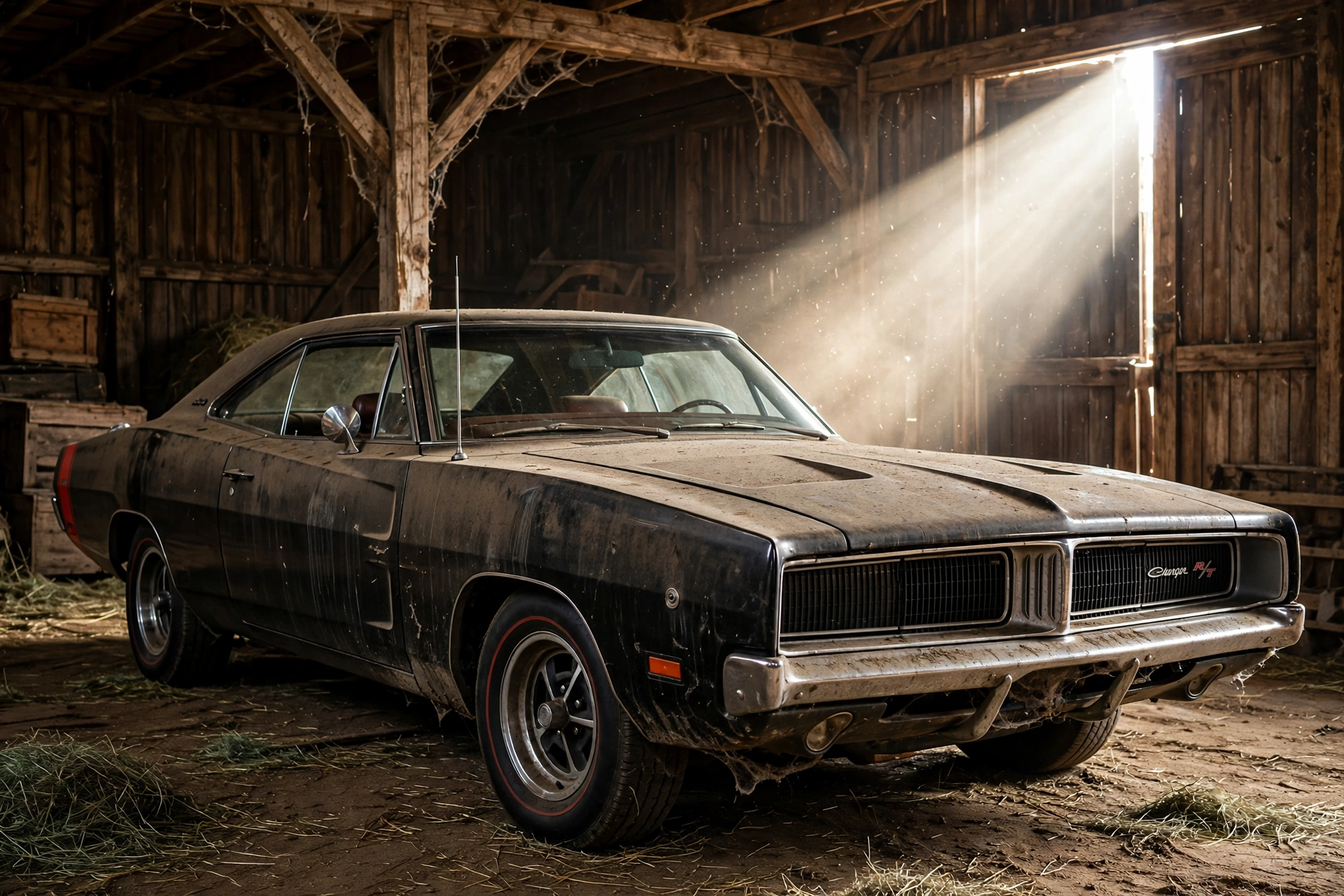
    Every barn find starts the same way: a door that has not opened in years, a shape under a tarp or a layer of dust, and the same question — is this a treasure, or just an old car that somebody gave up on? Tonight’s reel shows both ends of that story in ten seconds: a 1969 Dodge Charger R/T, filthy and forgotten, and then the same car gleaming, restored, alive again. The transformation is the hook. The car underneath is the reason it matters.

    It is not the first barn find we have covered — a Mustang Mach 1 waited forty years in the dark before anyone opened its barn door. But the Charger is a different kind of discovery, because what makes it valuable was decided on the factory floor in 1969, not in the barn.

    What the R/T actually is

    The 1969 Charger R/T is the performance version of the second-generation Charger — the restyled car that turned a slow seller into a hit, with production jumping to 96,100 cars in 1968 after just 15,788 the year before. R/T stands for Road/Track, and unlike plenty of performance badges of the era it came with real hardware: a heavy-duty suspension with stiffer torsion bars and a rear stabiliser, bigger brakes, heavy-duty shocks, dual exhausts with chrome tips, and the bumblebee stripe around the tail.

    440 standard, Hemi rare

    Under the hood, every R/T left the factory with the 440 Magnum as standard: 440 cubic inches, a single four-barrel carburettor, 375 horsepower and 480 lb-ft of torque. The only optional engine was the 426 Street Hemi — 425 horsepower and 490 lb-ft from two four-barrel carburettors — and almost nobody ordered it. Dodge built just over 20,000 Charger R/Ts for 1969, but only 432 of them got the Hemi: 208 with the TorqueFlite automatic, 224 with the four-speed manual. That is why a dusty Hemi car is a six-figure discovery and a dusty 440 car is still a serious one. In period testing, Motor Trend recorded a 440 automatic R/T doing 0–60 mph in 6.1 seconds and the quarter-mile in 13.9 seconds at 101.4 mph. The Hemi’s rarity is the same story we told in our Battle of the Big Three cold-start comparison, where the 426 Hemi was the Mopar entry.

    Four questions before a single bolt turns

    But the dust hides the questions that decide whether a barn find is worth restoring at all. First: is it numbers-matching — does the engine in the car match the car it left the factory in? Second: is the fender tag still there, and does it say R/T, or is this a base Charger wearing an R/T stripe? Third: where is the rust — floors, frame rails and the lower quarters, the places dust and damp work together for decades. And fourth, the least glamorous and most decisive: is there a clean title? A genuine R/T with its original 440, a readable tag and solid rails is a restoration. The same car with a swapped engine, a missing tag and rotten floors is a parts donor wearing a good story.

    That is the real before and after. The dust makes every barn find look the same — mysterious, romantic, full of promise. The gleam at the end of tonight’s reel is not just polish. It is the answer to all four questions coming back yes, one expensive bolt at a time.

    Tonight’s reel shows the dust and the gleam — watch it, then tell us in the comments: you open the barn doors and find THIS. What is the first thing you do?

    Sources

    Specifications, production figures and test results in this article were checked against:

  • 340 Six Pack: The Small-Block That Scared the Big-Blocks

    340 Six Pack: The Small-Block That Scared the Big-Blocks

    On paper, the 340 Six Pack should not have been a threat. It was a small-block — 340 cubic inches against the 426 Hemi’s 426 and the 454’s 454 — rated at just 290 horsepower, a number the big-blocks laughed at. But the paper lied, and everybody in 1970 knew it. The Six Pack was three Holley two-barrel carburettors on an Edelbrock intake, feeding a high-revving 340 that made far more than its rating — estimates put real output over 320 horsepower — and it came in two cars built for one purpose: to get Mopar into the SCCA Trans Am series.

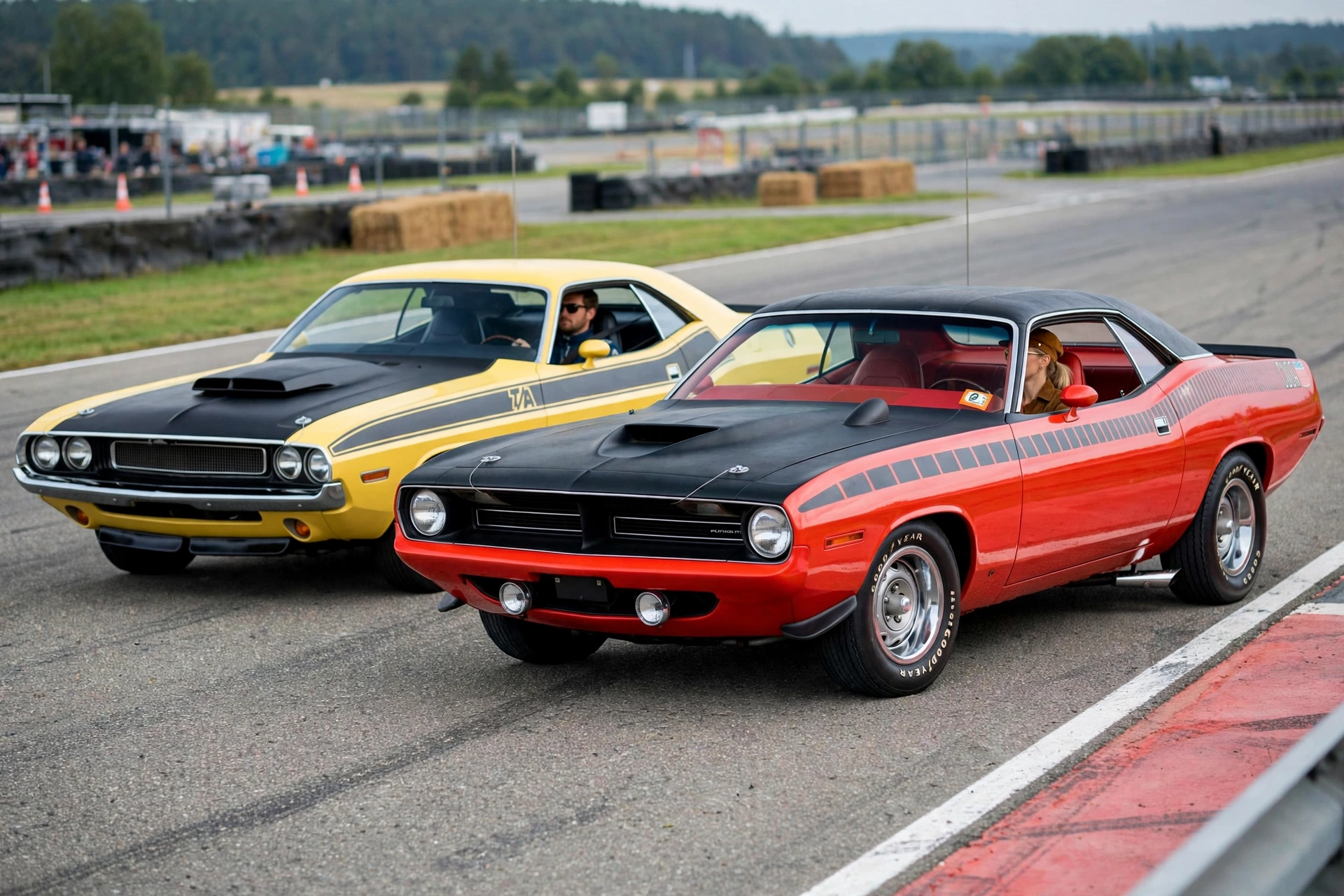
    Trans Am rules capped engines at 305 cubic inches, so Chrysler’s race engineers destroked the 340 to 303.8 cubic inches. With new cast-iron heads with massive ports and race internals, the racing version made over 460 horsepower — more than the 426 Street Hemi’s official 425. To qualify, the rules demanded showroom cars, so Dodge and Plymouth each built a street version in spring 1970: the Dodge Challenger T/A, named for Trans Am, and the Plymouth AAR ‘Cuda, named for Dan Gurney’s All American Racers team. Both were one-year-only cars. Plymouth built 2,724 AAR ‘Cudas in about five weeks, March to April 1970; Dodge built 2,399 Challenger T/As.

    The Street Cars: Challenger T/A and AAR ‘Cuda

    The AAR ‘Cuda is the racing cousin of the 1970 Plymouth ‘Cuda we covered on Day 4 — same Barracuda body, but built to turn rather than just to go straight. The street cars got the full treatment, not just a badge. Both had the 340 Six Pack (Plymouth called it the Six Barrel, same hardware), a functional fibreglass hood with a big flat-black scoop, a rear spoiler, side-exit exhausts that dumped ahead of the rear wheels — the sound this morning’s reel is duelling over — stiffer suspension with heavy-duty torsion bars and bigger sway bars, and staggered tyres, bigger at the back than the front. They were built to turn, not just to go straight, which made them strange and wonderful in a muscle-car world obsessed with the quarter-mile.

    Why the Six Pack Still Matters

    It did not work, at least not on the track. Neither car fared well in the 1970 Trans Am season, and Mopar pulled out after a single year. The T/A and the AAR became history in the same season they were born. But that failure is exactly why they matter now: 2,399 and 2,724 cars, one year, one racing rule, and an engine that was always better than its badge claimed. The big-blocks won the horsepower war on paper. The Six Pack won the argument that a small-block, breathing through three carburettors and shouting through side pipes, could scare them anyway.

    This morning’s reel asked it first — Comment 1 for Challenger T/A, 2 for AAR ‘Cuda. Listen to both exhaust notes, then tell us: which side pipe sounds meaner? If you enjoy a good head-to-head, our Chevelle vs Road Runner duel from Day 6 ended in a dead heat — see if this one does too.

    Keep Reading

    Sources

    Specifications, production figures and test results in this article were checked against:

  • Three Cold Starts, One Question: Which V8 Sounds Best — Ford, Chevy or Mopar?

    Three Cold Starts, One Question: Which V8 Sounds Best — Ford, Chevy or Mopar?

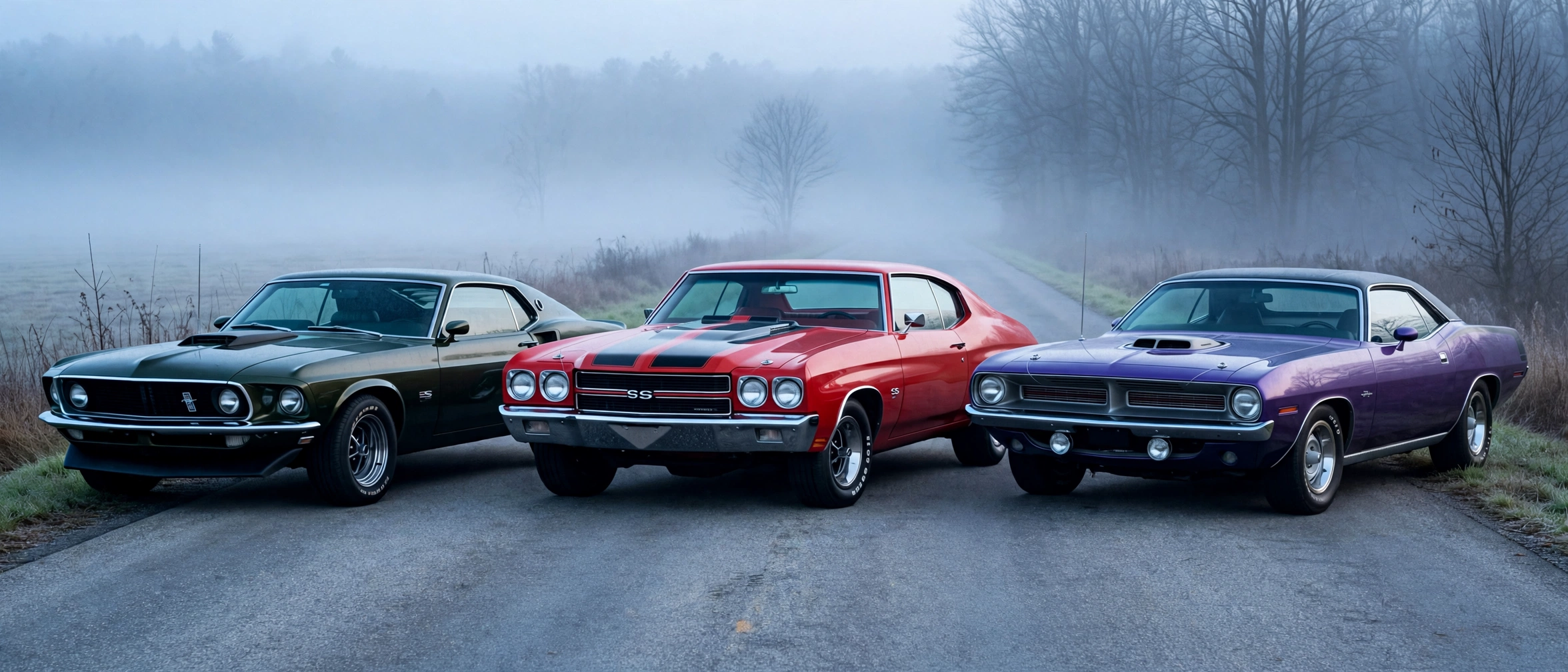
    A cold start is the most honest sound a muscle car ever makes. No warm-up, no choke fully off, no exhaust yet hot enough to hide anything — just a big V8 clearing its throat on a cold morning, fast idle, thick vapour, and the whole neighbourhood knowing exactly what you drive. Tonight’s reel lines up three of them, one from each of the Big Three, and asks you to vote 1, 2 or 3. Here is the case for each side.

    1 — Ford: the Boss 429. Ford’s entry is the most exotic engine of the three. The 429 cubic-inch Boss V8 was a race design built to satisfy NASCAR’s homologation rules: aluminium heads with semi-hemispherical combustion chambers — the “semi-hemi” — four-bolt main caps, a forged steel crank and forged rods, and a 735 CFM Holley four-barrel. Ford rated it at 375 horsepower, but everyone at the time understood the real figure was near 500. Only 859 were built for 1969, each one hand-finished by Kar Kraft because the engine was too big for a standard Mustang engine bay. On a cold start it is the highest-strung of the three — a sharp, metallic bark that settles into an impatient, cammy idle. It sounds like a race engine because that is what it is: the street car existed only so the engine could race.

    2 — Chevy: the LS6 454. Chevrolet’s answer is displacement and torque. The 1970 Chevelle SS 454 in LS6 form made 450 horsepower and 500 lb-ft of torque — the most powerful stock big-block Chevrolet ever built, and a one-year-only option. Where the Boss 429 screams, the LS6 thunders: it is widely remembered for one of the deepest exhaust notes ever fitted to a production muscle car, a slow, thunder-like rumble at idle that explodes into a booming roar under throttle. On a cold morning it is the one you feel in your chest before you hear it properly. It does not need to rev to make its point — it just needs to idle.

    3 — Mopar: the 426 Hemi. Chrysler’s 426 Hemi is the legend the other two were built to beat. 425 horsepower and 490 lb-ft from hemispherical combustion chambers — the design that gave the engine its name — and an exhaust pulse so deep and slow that at idle the whole car shakes visibly. The Hemi’s sound is primal rather than refined: a thunderous, loping idle that turns into a raw bellow the moment the throttle opens. It is the engine Ford built the Boss 429 to take on at the superspeedways, and the one every bench race in 1970 eventually came back to.

    So which one wins tonight? There is no wrong answer — that is the point of the vote. The Ford is the rarest and the most race-bred, the Chevy is the deepest and the most powerful on paper, and the Mopar is the one that made the other two necessary. Listen to all three cold starts in tonight’s reel, turn the volume up, and vote with your ears, not your badge loyalty. Or vote with your badge loyalty — nobody will blame you.

    Watch tonight’s three cold starts on the page, then vote in the comments: 1 for Ford, 2 for Chevy, 3 for Mopar. Which V8 wakes the street best?

    Sources

    Specifications, production figures and test results in this article were checked against:

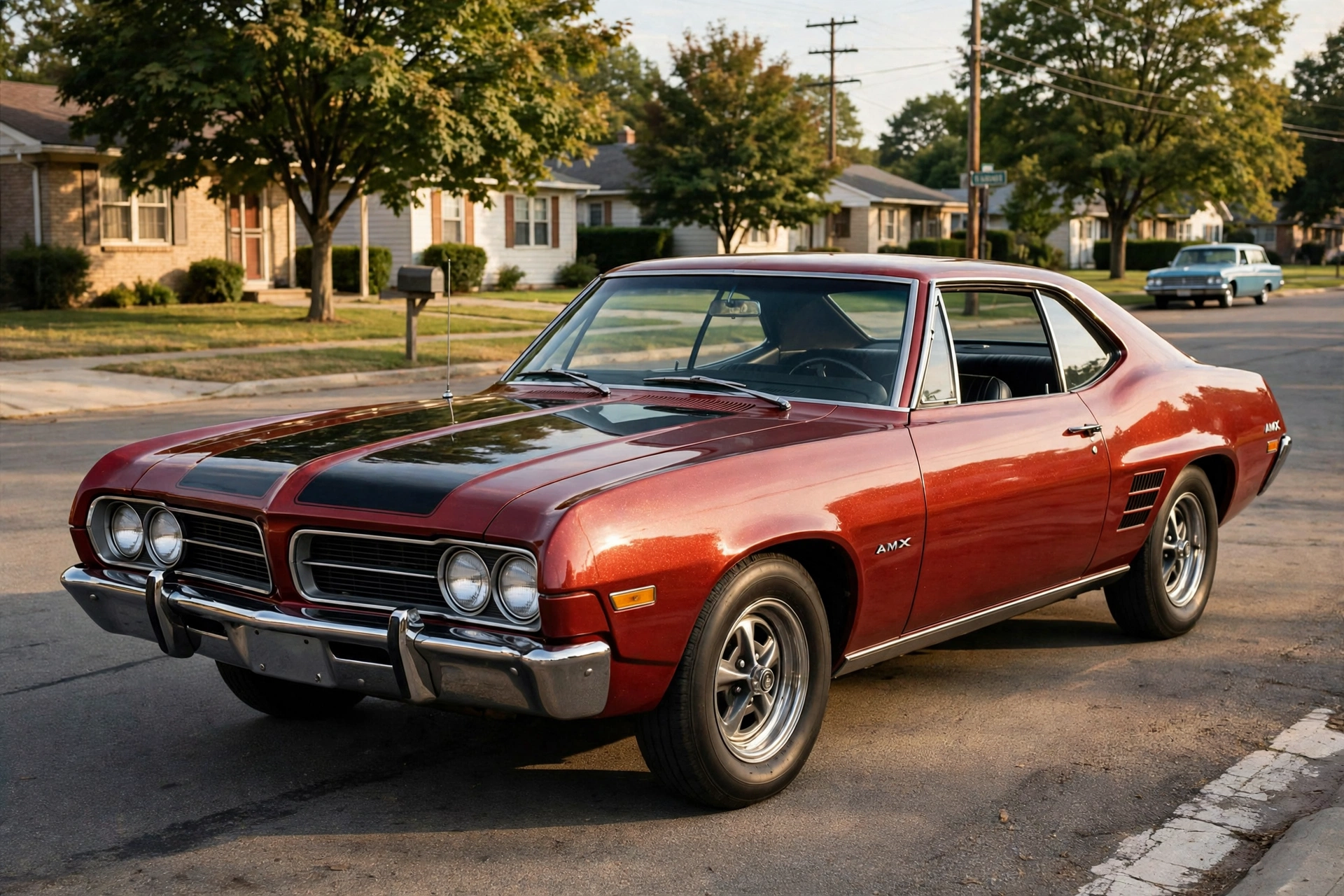
  • The 1969 AMC AMX 390: The Two-Seat Underdog That Punched Above Its Weight

    The 1969 AMC AMX 390: The Two-Seat Underdog That Punched Above Its Weight

    In 1968, American Motors did something none of the Big Three would dare: it built a two-seat sports car. Not a shortened pony car, not a trim package — a genuine two-seater, on a 97-inch wheelbase, aimed squarely at the Chevrolet Corvette. From 1968 to 1970, exactly two American production cars seated two people: the Corvette and the AMX. AMC built just 19,134 of them in three model years — 6,725 in 1968, 8,293 in 1969, and 4,116 in 1970 — which makes every surviving AMX rarer than almost any Mustang or Camaro of the same era.

    The 390: AMC’s Biggest Hammer

    The 1969 car in this morning’s reel is the one to have: the AMX 390. The 390-cubic-inch (6.4-litre) V8 was the top engine in the range, rated at 315 horsepower at 4,600 rpm and 425 lb-ft of torque at 3,200 rpm, with a 10.2:1 compression ratio and a single Carter four-barrel carburetor. It was a serious piece for the money — a forged steel crankshaft and forged connecting rods at a time when plenty of competitors were casting theirs. In 1969, 3,620 buyers paired the 390 with a four-speed manual and 2,183 with the three-speed automatic. Add the Go Package — $311 covering the 390, power disc brakes, redline tyres, a handling package, a Twin-Grip differential and heavy-duty cooling — and you had a complete performance car for about $3,681, on a base price of $3,297.

    It was quick, too, and not just on paper. Motor Trend’s road test of a 390 four-speed AMX recorded 0–60 mph in 6.9 seconds and the quarter-mile in 15.2 seconds at 92 mph — in a car weighing barely over 3,000 pounds. That is the AMX’s real trick: it did not need the biggest engine in Detroit, because it did not carry the most weight. The short wheelbase and light body made it feel closer to a sports car than a muscle car, which is exactly what AMC’s designer Dick Teague intended.

    Why It Stayed the Underdog

    So why is it still the underdog? AMC never had Ford’s or GM’s megaphone, and the AMX never got a second act — the two-seater died after 1970, and the Javelin carried on alone. But that is also the appeal. The 1969 AMX 390 is a car that had to be good to exist at all: no heritage to trade on, no massive dealer network, just a small company betting everything on 97 inches of wheelbase and 390 cubic inches. This morning’s reel shows the engine bay because the engine bay is the argument — open it, and the smallest car company in Detroit suddenly looks like it belonged in the fight.

    This morning’s reel asked it first — Comment 1 for AMX, 2 for JAVELIN. Watch the 390 under the hood, then tell us: does the underdog deserve a place next to the Corvette?

    Keep Reading

    Sources

    Specifications, production figures and test results in this article were checked against:

  • Listen to That 429 Scream: The 1969 Boss 429 Mustang Was a NASCAR Engine With Licence Plates

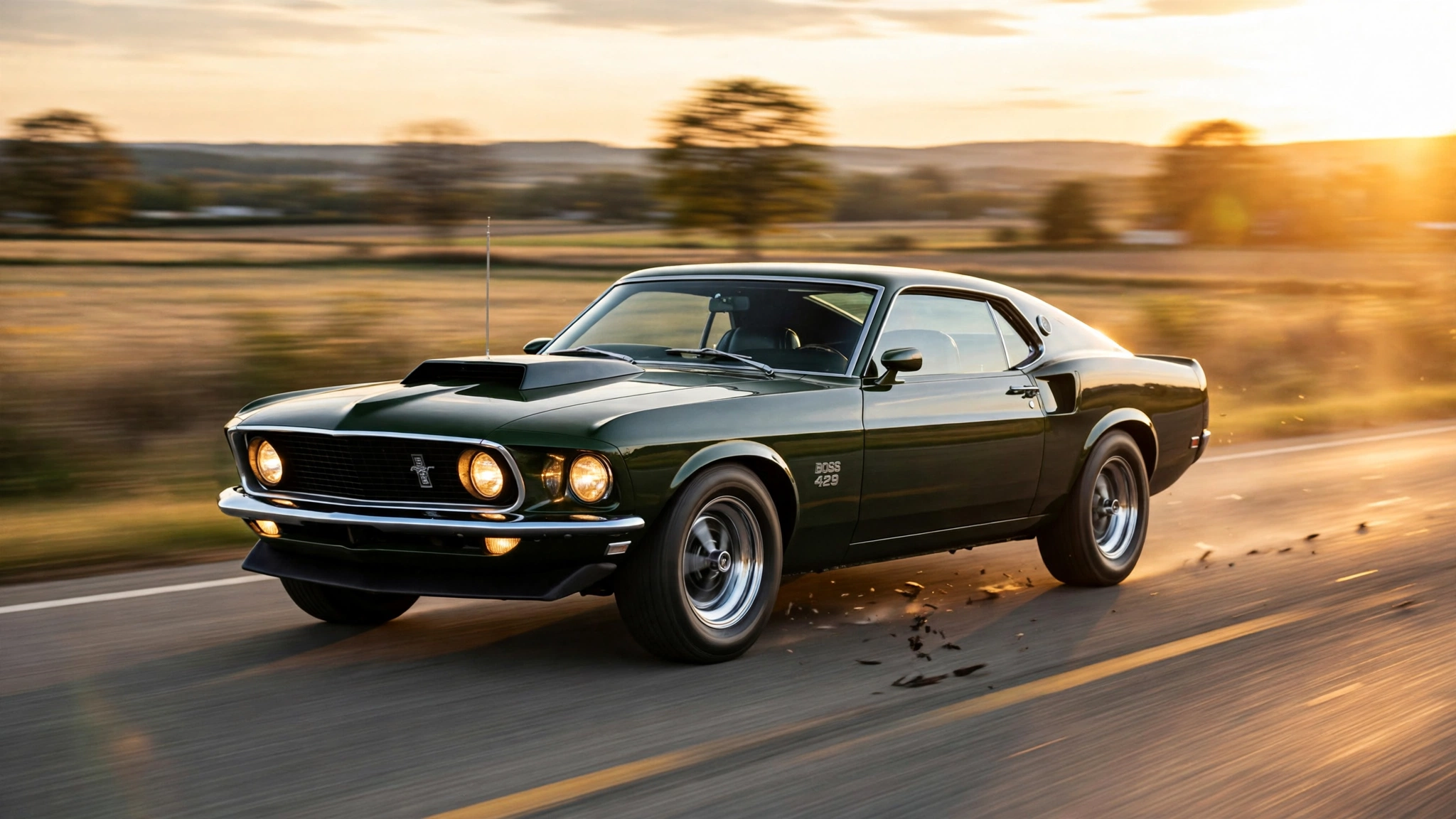
    Listen to That 429 Scream: The 1969 Boss 429 Mustang Was a NASCAR Engine With Licence Plates

    Some muscle cars were built to sell. The 1969 Boss 429 Mustang was built to qualify. NASCAR’s homologation rules said Ford had to put at least 500 street cars with its new 429 engine on the road before it could race the engine — so Ford did exactly that, and not one car more than it had to. Only 859 Boss 429 Mustangs were built for 1969, with another 499 for 1970.

    The engine was the whole point. The 429 cubic-inch (7.0-litre) Boss V8 was a race design from the start: aluminium cylinder heads with semi-hemispherical combustion chambers — the “semi-hemi” — four-bolt main caps, a forged steel crank and forged steel connecting rods, and a 735 CFM Holley four-barrel on an aluminium intake. Ford rated it at 375 horsepower at 5,200 rpm and 450 lb-ft of torque at 3,400 rpm, figures everyone at the time understood were conservative. Period tests and insider estimates put the real output near 500 horsepower, with quarter-mile times around 14 seconds.

    It was so big it did not fit. A standard Mustang engine bay could not take the Boss 429, so Ford sent partially built bodies from its Rouge plant to Kar Kraft, its specialist contractor in Brighton, Michigan — the same outfit that had helped build the Le Mans-winning GT40. Kar Kraft widened the space between the shock towers, revised the suspension geometry, relocated the battery to the trunk, and installed the engine by hand. Every finished car carried a Ford serial number plus a Kar Kraft “KK” number stamped on its door data plate. The 1969 cars ran hydraulic lifters; 1970 switched to solid lifters to stop valve float at high rpm.

    Ford’s target was never the Mustang itself. The homologated 429 went racing in Torino Talladegas and Mercury Cyclones on the superspeedways, making its NASCAR debut on 30 March 1969 at Atlanta with Cale Yarborough at the wheel — built to take on Chrysler’s 426 Hemi, the engine that had ruled the big ovals. The Mustang was simply the street car Ford chose to carry the engine into the showrooms, because no Torino could make the statement a Mustang could.

    That is what makes tonight’s reel worth ten seconds of your evening. The car in it is one of 859 — a hand-finished homologation special, a race engine wearing licence plates, sold through ordinary dealerships because a rulebook demanded it. Turn the volume up for the flyby, then answer the reel’s question honestly: would you drive it, or lock it in a museum?

    Watch tonight’s 1969 Boss 429 flyby reel on the page, then tell us in the comments: drive it, or lock it in a museum?

    Ford reference material

    Ford’s Mustang timeline lists the Boss 429 as a 375-horsepower addition to the 1969 lineup. Ford Performance’s engine history provides background on the 429 Boss and the related Ford big-block engines.

    Sources

    Specifications, production figures and test results in this article were checked against:

  • Chevelle vs Road Runner: The 1970 Duel That Ended in a Dead Heat

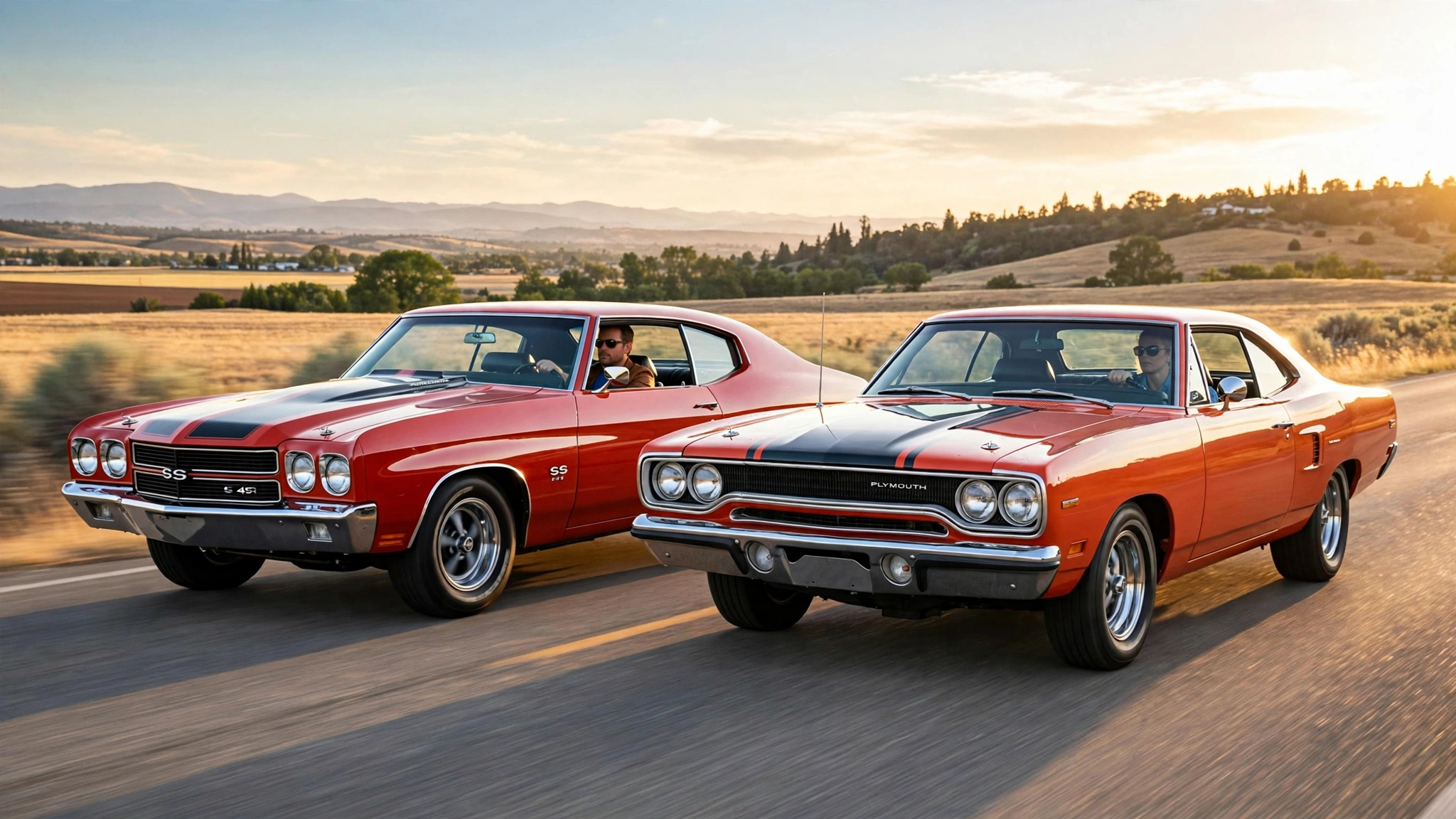
    Chevelle vs Road Runner: The 1970 Duel That Ended in a Dead Heat

    1970 was the year the horsepower war peaked, and this duel is the proof. For years General Motors had banned engines over 400 cubic inches in its intermediate cars. When that ban lifted for 1970, Chevrolet finally gave the Chevelle the engine it had been waiting for: the 454. In LS5 form it made 360 horsepower; in LS6 form — a one-year-only option, produced only in 1970 — it made 450 horsepower and 500 lb-ft of torque, the most powerful stock big-block Chevrolet ever built.

    The Road Runner answered with choice instead of a single headline number. It was born in 1968 as a cheap, bare-bones speed machine — a $2,870 sticker price that left buyers money to spend on the engine — and by 1970 the menu ran from the standard 383 at 335 horsepower, through the 440 at 375, to the 440 Six Barrel at 390 horsepower and 490 lb-ft, and finally the 426 Street Hemi at 425 horsepower and 490 lb-ft. The Six Barrel is the clever pick in this fight: three two-barrel carburetors, Hemi-matching torque, and a $250 option price against $841 for the Hemi — near-Hemi speed for a third of the money.

    So who actually won? The period timing slips refuse to pick a side. Hot Rod magazine ran a stock LS6 Chevelle through the quarter-mile in 13.44 seconds, and period tests put the Hemi Road Runner right beside it. Car Craft went quicker still in the Chevelle, 13.12 seconds at 107 mph, while the 440 Six Barrel Road Runner was clocked around 13.5 seconds, again essentially the same car. Different days, different tracks, different drivers — but every serious test lands both cars in the low 13s, and that is the real result: on horsepower the Chevelle wins by 25, on the clock nobody wins.

    That is the argument this morning’s reel is having, ten seconds at a time. Two 1970 big-blocks, side by side, full car and movement from the first second — the exact format that works, after the static tachometer reel on Day 4 stalled at 575 views. Watch it, pick your side, and be honest about why: the numbers, or the noise?

    This morning’s reel asked it first — Comment 1 for CHEVELLE, 2 for ROAD RUNNER. Cast your vote on the page, then tell us: which one are you taking home?

    Sources

    Specifications, production figures and test results in this article were checked against:

  • How Much Tire Life Is Left? The 1968 Camaro SS and the Art of the Burnout

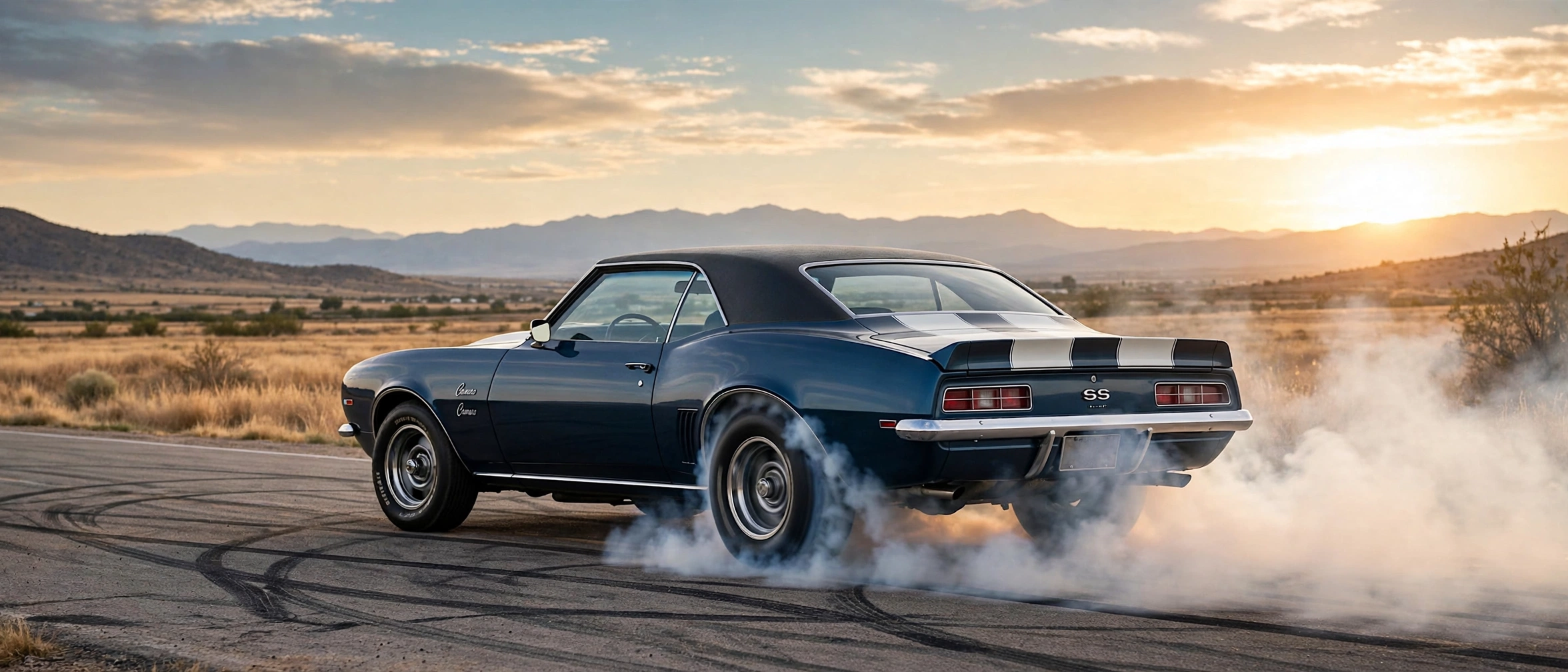
    How Much Tire Life Is Left? The 1968 Camaro SS and the Art of the Burnout

    A burnout looks like showing off, and it is — but it started as work. On a drag strip, spinning the rear tyres cleans them and heats the rubber until it grips, and on the street it became the loudest possible way to say what is under the hood. The 1968 Camaro SS had plenty to say.

    The SS was an option package, not a separate model, and in 1968 it came with a real choice. The base SS350 carried the new-for-1967 350 small-block, rated at 295 horsepower and 380 lb-ft of torque. Step up to the SS396 and there were three big-blocks to pick from: the 325-horsepower L35, the 350-horsepower L34 — new for 1968 — and the 375-horsepower L78 with its solid-lifter cam, 11:1 compression and Holley four-barrel. The rarest of all was the L89, the L78 fitted with aluminium cylinder heads: only 272 were built in 1968. Every SS came with a four-barrel carburetor and dual exhaust as standard, plus the bumblebee nose stripe, blacked-out grille and simulated hood intakes that told everyone at the lights what they were looking at.

    The 1968 car matters for a burnout for a reason you cannot see in the smoke. The 1967 Camaro suffered from axle tramp — the rear axle hopping under hard acceleration — so for 1968 Chevrolet fitted multi-leaf rear springs in place of the single-leaf set-up and staggered the rear shock absorbers. It was a small, unglamorous fix, and it is exactly what lets a ’68 SS plant its tyres and spin them cleanly instead of juddering across the asphalt. Side marker lamps were the visible change for the year; the suspension was the one that mattered when the light went green.

    How many SS Camaros were built in 1968? Chevrolet’s engine records tell the story: 12,496 with the 350, 10,773 with the 325-horsepower 396, 2,579 with the 350-horsepower 396, 4,575 with the 375-horsepower 396, and 272 with the aluminium-head L89 version of it — 30,695 SS Camaros in all, out of about 235,000 Camaros that year. The SS was never rare, and that is part of the point: this was affordable, attainable muscle, built in numbers ordinary buyers could actually find and afford.

    Performance backed up the noise. A 396/325 SS had more than enough muscle to turn a set of rear tyres into smoke on demand. The top L78 cars were quicker still, into the high 13s in the quarter-mile.

    That is what tonight’s reel is: ten seconds, one Camaro, and a question with no wrong answer. Watch it, turn the volume up, and then be honest — how much tyre life is left?

    Watch tonight’s 1968 Camaro SS burnout reel on the page, then tell us in the comments: best burnout car ever — Camaro SS, or something else entirely?

    Sources

    Specifications, production figures and test results in this article were checked against:

  • Plum Crazy: The Colour That Made the 1970 Challenger R/T Impossible to Ignore

    Plum Crazy: The Colour That Made the 1970 Challenger R/T Impossible to Ignore

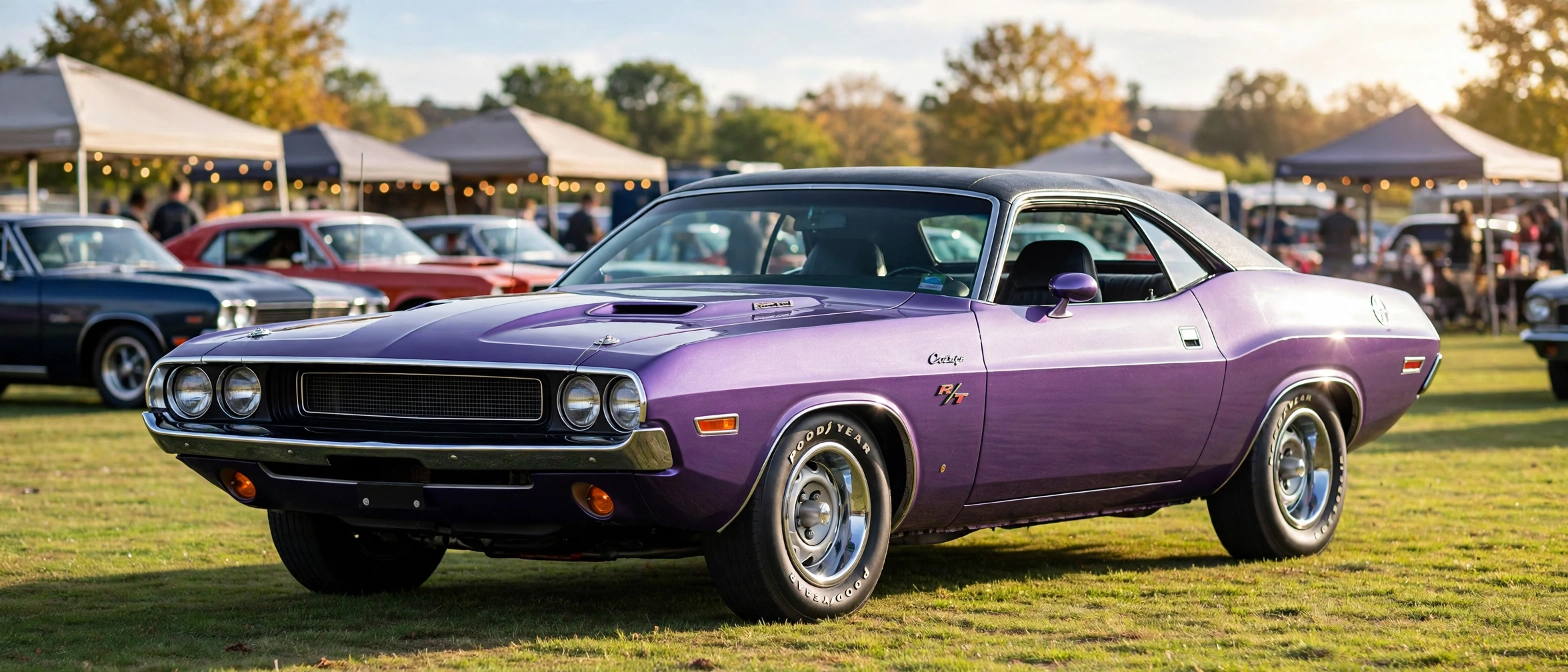
    Dodge arrived late to the pony-car fight, and it arrived loud. The Challenger debuted for 1970 on the new E-body platform — the same bones as the Plymouth ‘Cuda — with a long hood, a short deck, and room under it for almost every engine Chrysler made. The R/T, Road/Track, was the performance model, and it came standard with the 383 Magnum: 335 horsepower and 425 lb-ft of torque.

    The Engine Ladder

    The ladder above it was pure Mopar. The 440 Magnum added 40 horsepower and 55 lb-ft, to 375 horsepower. The 440 Six-Pack — three two-barrel carburetors — made 390 horsepower and 490 lb-ft. And at the top, the 426 Hemi: 425 horsepower and 490 lb-ft, officially, in a figure everyone understood was underrated, good for 0–60 mph in 5.8 seconds and a 14.1-second quarter-mile. Only 356 Challengers left the factory with a Hemi in 1970, which is why a documented Hemi car is now one of the most valuable muscle cars on earth.

    The Paint: Plum Crazy, Code FC7

    But the engine is only half of this morning’s reel. The other half is the paint. Plum Crazy — factory code FC7 — was one of Chrysler’s High-Impact colours, a $14 option in 1970 alongside Sublime green, Go Mango, Hemi Orange, Panther Pink and Top Banana. The idea was simple: paint so saturated it could be seen from a quarter-mile away, with a name to match. Plum Crazy was sprayed over a white primer, which is what keeps the purple bright instead of muddy — a detail restorers still get wrong when they use a grey or black base. The R/T added its own jewellery around it: the twin-scoop hood with engine call-outs, chrome gas cap, R/T badging on the grille, fenders and trunk, and the Hurst Pistol Grip shifter inside.

    It worked. Fifty-five years later, a Plum Crazy Challenger still stops people at a car show before they have read a single badge — which is exactly what this morning’s reel shows, chrome first, engine second. And the vote in that reel is the same argument Dodge started in 1970: Plum Crazy, or Hemi Orange?

    This morning’s reel asked it first — Comment 1 for Plum Crazy, 2 for Hemi Orange. Cast your vote on the page, then tell us: which High-Impact colour would you order today?

    Keep Reading

    Sources

    Specifications, production figures and test results in this article were checked against: